7 V, [ b( u& }4 z. V+ r
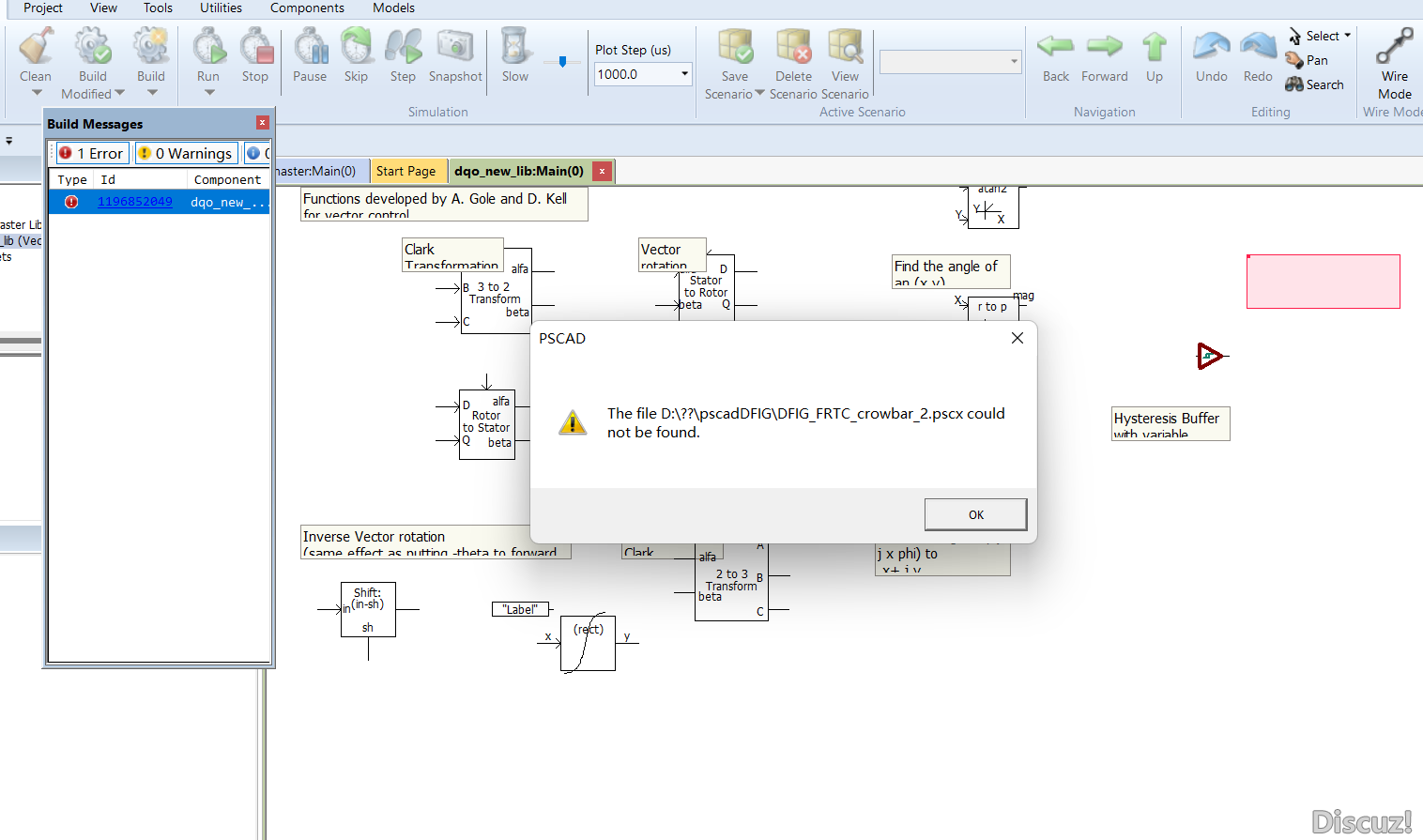
那位老师可以帮我看看这是什么出现了问题。急用,谢谢!: i- ^. C9 t2 m& h8 A
. A: @; I; r: e% g# n. m' S% A
+ }% O3 M- b }
---------------------------------------------------- # H# r) U. W0 [9 vERROR/ERROR/ERROR/ERROR/ERROR/ERROR/ERROR/ERROR/ERROR/ERROR/ERROR/ERROR/ERROR/ER0 M0 G& s& d/ O1 c1 `
ROR/ERROR/ERROR/ERROR/ERROR/ERROR/ERROR/ERROR/ERROR/: G# g3 c; B" l- P( t5 d
ERROR/ERROR/ERROR/ERROR/ERROR/ERROR/ERROR/ERROR/ERROR/ERROR/ERROR/ERROR/ERROR/ER. K0 \: `4 x4 A1 s* g3 V
ROR/ERROR/ERROR/ERROR/ERROR/ERROR/ERROR/ERROR/ERROR/* }6 m1 M$ W! M; ^3 {
--------------------------------------------------------------------------------+ e5 ?* a# w5 N2 _# u7 A
---------------------------------------------------- 5 X8 s3 I8 g: Q6 | F2 pYou lose, fella. The EMTP logic has detected an error condition, and is now go. i1 a) X$ b7 B x4 B6 G
ing to terminate program execution. The following 2 ?& |3 O9 N, |/ s. o7 nmessage summarizes the circumstances leading to this situation. Where an otherw- b" | E2 h) W# q9 J7 H
ise-unidentified data card is referred to, or where4 n% ~4 c' T. s
the "last" card is mentioned, it is the most recently read card of the input dat" j* \3 \0 E1 E9 }
a that is meant. The 80-column image of this card ' j @) c, R* T9 Cis generally the last one printed out prior to this termination message. But po ! D( y' l; Q& Y8 e l# t7 Wssibly this last-read card has not yet been " l$ Y- D2 g( x6 R- }* idisplayed, so a copy follows:: k6 |$ r( O& t1 B+ `* \
" 3 4.1790373848948505000E-07& f, [. }; E) F, m
" 6 O( y j. X' f" O: l P KILL code number Overlay number Nearb: T7 M1 H0 s( v9 k- F6 @" [
y statement number+ S# B8 O: O0 m1 o5 V X
197 37 C a& W1 u# v& W; A" B
76569 K8 s- v( D$ X& h8 f/ ?
KILL = 197. The travel time of the distributed line that is now being read doe0 ~2 Z+ C3 l' I
s not exceed the time-step size DELTAT (see 4 P0 s6 I: |6 T+ bfloating-point miscellaneous data card). A mode has just been found with travel 7 D( N7 J0 m* s time 4.17903738E-07 sec. Either decrease3 ~ I- J$ Y' r
DELTAT, or increase the line length (if in error), or perhaps even change mode% q- A c$ {+ W+ g: A4 T
ling (the requirement disappears if a Pi-circuit * f( g1 J: n: q0 ~, owere used instead). 4 M( x4 H" T6 B3 U! e--------------------------------------------------------------------------------, Z7 y0 I0 U% F: A3 K2 O/ d
----------------------------------------------------0 C. [. J2 l) h1 S/ n! w* m
ERROR/ERROR/ERROR/ERROR/ERROR/ERROR/ERROR/ERROR/ERROR/ERROR/ERROR/ERROR/ERROR/ER - D* G W4 y/ c4 ^ROR/ERROR/ERROR/ERROR/ERROR/ERROR/ERROR/ERROR/ERROR/ + u; o7 r R+ Q. O6 T: u8 b' rERROR/ERROR/ERROR/ERROR/ERROR/ERROR/ERROR/ERROR/ERROR/ERROR/ERROR/ERROR/ERROR/ER9 Q$ x: a- W& S0 S7 A, ]
ROR/ERROR/ERROR/ERROR/ERROR/ERROR/ERROR/ERROR/ERROR/ ! [3 W: p1 x; R4 `-------------------------------------------------------------------------------- 0 c* n0 T, e! t; d. u" K3 E----------------------------------------------------




 赣公网安备36040302000210号 )|网站地图


 狗仔卡
狗仔卡 发表于 2013-3-21 16:56:20
 提升卡
提升卡 置顶卡
置顶卡 沉默卡
沉默卡 喧嚣卡
喧嚣卡 变色卡
变色卡 显身卡
显身卡